Crews Clean Up The Iconic Cliffside Landmark At Black’s Beach
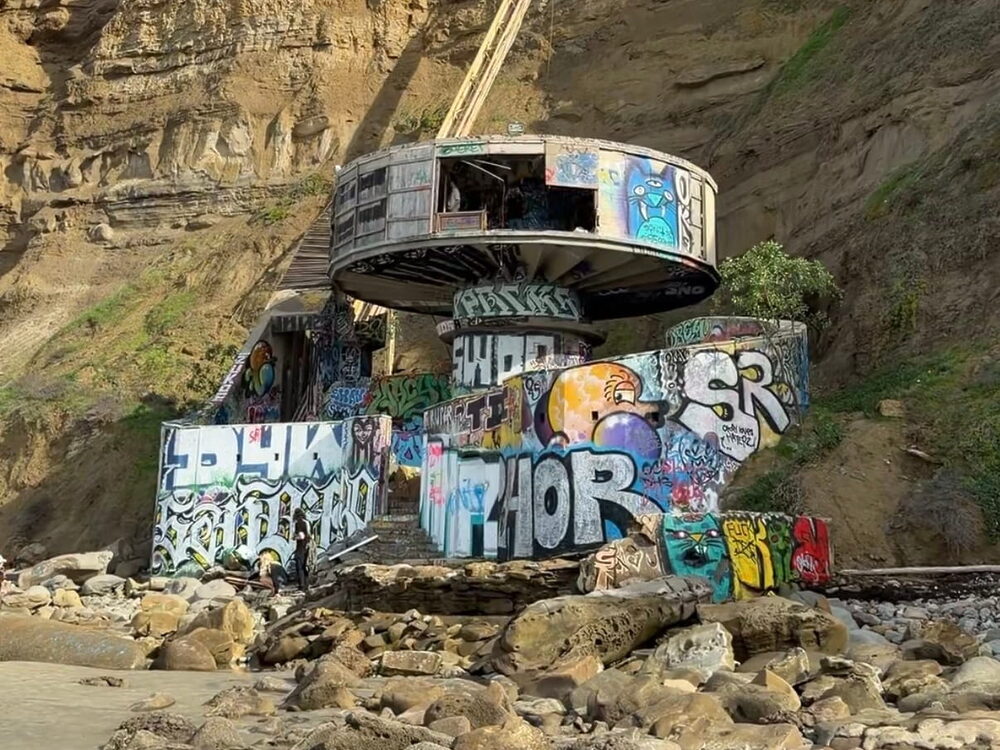
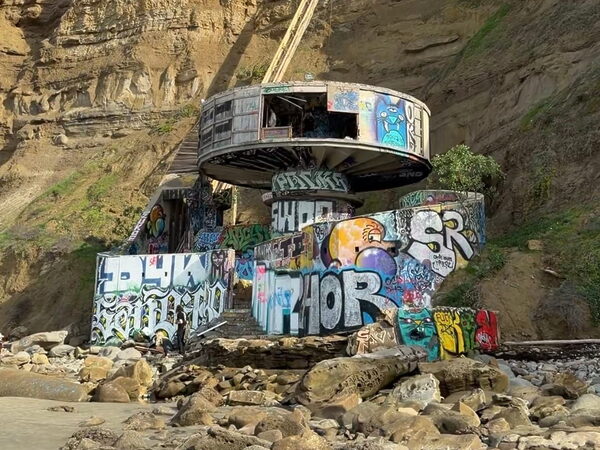
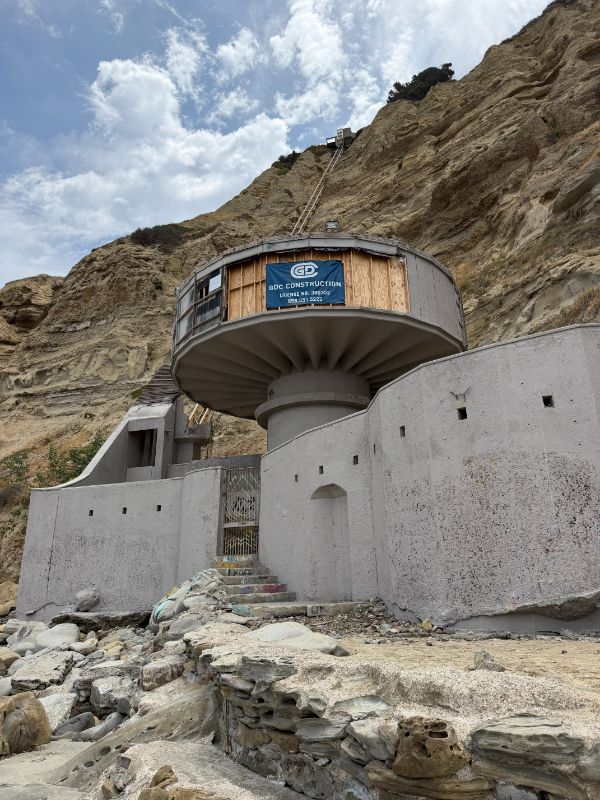
You’ve driven past it a thousand times and never knew it was there. Below the cliffs in La Jolla, the Mushroom House sits like a forgotten relic from another era. For years, the abandoned mansion has been covered in graffiti, vandalized and left to decay. But now, crews are finally cleaning it up and securing the property.
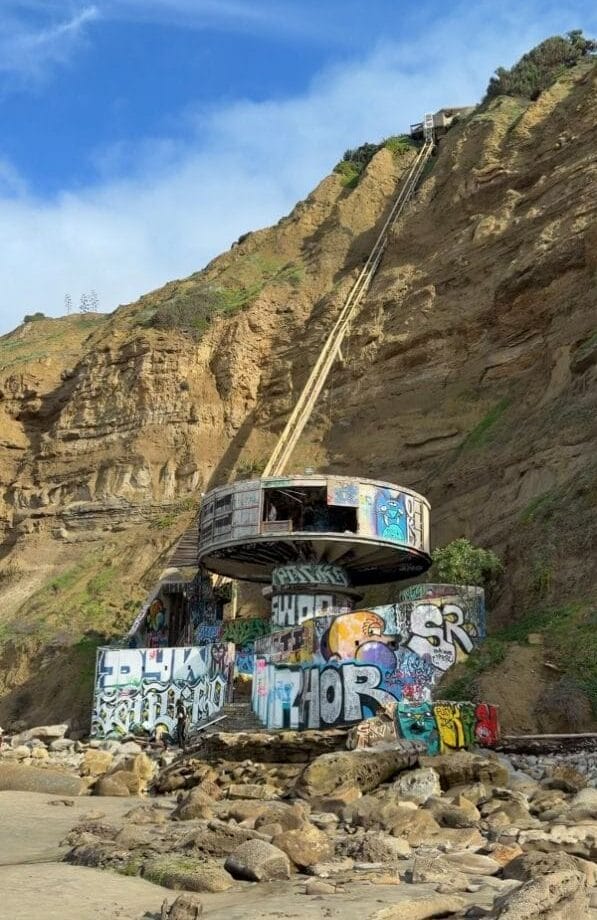
Built in 1968 as a private guest house, this architectural oddity was the vision of Sam Bell, widely reported to be an heir to the General Mills fortune. Bell wanted something that would impress, so he hired La Jolla architect Dale Naegle to design a futuristic retreat 300 feet below his main residence. The result? A mushroom-shaped mansion with panoramic windows and its own private tramway connecting it to the home above.
The location alone was an engineering feat. Bell brought in Arnold Hunsberger, Wendell Larson, and Richard McIntyre, the three founders of Elevator Electric Company, the same team behind the El Cortez Hotel’s first outdoor glass elevator in 1956. When workers abandoned the dangerous job before completion, the three founders finished the last 100 feet of the tramway themselves.
This kind of cliffside construction would never get approved today. The Mushroom House was built before the California Coastal Commission was established in 1972, making it a grandfathered landmark that couldn’t exist under current regulations.
The house connects to the main property at 9044 La Jolla Shores Ln. Local philanthropist Buzz Woolley acquired the Mushroom House and placed it in a family trust, though accounts differ on the exact year, with some pointing to 2015 and others to as early as 1987. While Woolley maintains the property, he doesn’t live there.
In 2020, part of the bluff collapsed, sending more than 100 cubic yards of debris around the house and destroying the tramway.
Woolley moved the fallen cliff debris into a mound on the north side without a permit, earning a violation notice from the city and sparking conversations about the structure’s future.

Any tramway repairs will require permits from the Coastal Commission, which could deny improvements if they’re deemed harmful to the sensitive coastal area. The house remains in a state of decay, but it’s still a prominent landmark.
Now, after years of graffiti and vandalism, the 58-year-old landmark is finally getting attention. Updated shots show crews cleaning up the property and securing it from further damage. The graffiti is gone, and the site is being restored, with some early talk of a possible future as a lifeguard facility, though nothing is confirmed yet.
You can find the Mushroom House at the southern end of Black’s Beach. It’s best accessed during low tide from La Jolla Shores Beach, the Torrey Pines Glider Port trail or the paved path at Blackgold and La Jolla Farms Road. Remember, this is private property surrounded by rocks and a concrete wall. Bluff failures and rock slides happen without warning, so keep your distance and enjoy this architectural wonder from the beach.
The Mushroom House‘s future remains uncertain, but for now, it’s getting the cleanup it deserves. Whether you’re a local or a visitor, spotting this hidden house for the first time is still one of La Jolla‘s most surprising discoveries.

Erik Hale is the visionary and publisher behind LOCALE Magazine. He launched the magazine in 2010, wanting to give the community of OC a premiere lifestyle magazine that knew all the native knowledge behind OC. “Six years ago Ashley and I sat at a table scratching the name LOCALE (among some other names) onto a sheet of paper,” says Erik, “coming up with story ideas and basically dreaming. Everything we imagined has happened and we have been blessed with so much more. I am so grateful as we start another year for my family, my two wonderful children, my health, our amazing writers, designers and photographers, our advertising partners and you.”